Bodleian Library

The Bodleian Library is one of Oxford's most famous landmarks. Among the oldest in Europe, it's easy to visit and incredible to see.
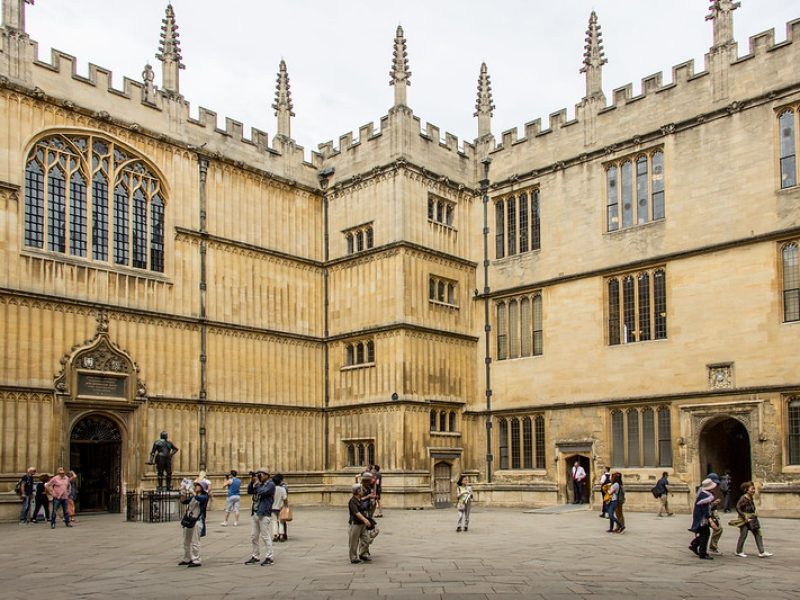
Bodleian Library - Entrance. Image courtesy of Billy Wilson.

The Bodleian Library is one of Oxford’s most famous landmarks. Among the oldest in Europe, it’s easy to visit and incredible to see. Anyone visiting Oxford should make a stop here. The library as a whole can be seen from the outside (which is already an impressive sight), but there are also guided tours throughout the day. 

The Bodleian Library is housed in several historic buildings in Oxford, including the Old Bodleian, Radcliffe Camera, and Duke Humfrey’s Library. The Old Bodleian, located on Broad Street, includes the Divinity School, a stunning example of English Gothic architecture used for university ceremonies and exams.

Oxford University - Old library (Duke Humfrey’s). Image courtesy of Wikipedia.

Ticket required • Ideal for a short visit

Duke Humfrey’s Library is the oldest reading room within the Bodleian Library and is often considered the historic heart of the library itself. The room is known for its quiet atmosphere, dark wooden bookcases, and beautifully painted ceiling panels displaying the coats of arms of the University and its benefactors.

One of the library’s most unusual features is the historic reading booth created for King Charles I during his time in Oxford. The room also preserves traces of its medieval past — many of the books were once chained directly to the shelves for protection.

Bodleian Library - Entrance. Image courtesy of Billy Wilson.

Old Schools Quadrangle

Perfect for a short visit • Includes the Bodleian gift shop

The Old Schools Quadrangle, often referred to as the “Old Library,” was constructed between 1613 and 1624. Originally, the buildings surrounding the courtyard were used as lecture halls and examination rooms, known at the time as “schools.” 

Part of Sir Thomas Bodley’s original library was also housed within this historic complex. Over time, the entire quadrangle became integrated into the wider Bodleian Library system, officially forming part of the Bodleian Library complex by 1859.

Harry Potter Filming Locations: Divinity School ceilings (the Hogwarts Infirmary). Photo courtesy of James Clark, via Flickr Commons.

Ticket required • Ideal for a short visit

Built between 1424 and 1488, the Divinity School is one of Oxford’s finest examples of English Gothic architecture. The hall is especially famous for its extraordinary vaulted stone ceiling and historic interior, making it one of the most visually impressive university buildings in the city.

The Divinity School was Oxford University’s first purpose-built teaching and examination room and remains the oldest surviving teaching space in the university. Many visitors also recognise it as the Hogwarts infirmary from the Harry Potter films.

What's the History of Oxford's Bodleian Library?

The Bodleian Library boasts a rich and continuous history dating back to 1602, when it was officially re-founded by Sir Thomas Bodley after a period of neglect. However, the library’s roots are much older, with its origins tracing back to the medieval period.

Thomas Cobham, Bishop of Worcester, created it when he donated his collection of chained books. This initial library, situated above the north side of the University Church of St Mary the Virgin on the High Street, grew with subsequent donations. Humphrey, Duke of Gloucester, gifted a collection of manuscripts between 1435 and 1437 – which required a larger building.

A bigger room was built above the Divinity School – the room that is today known as Duke Humfrey’s Library.

The re-founding of the Bodleian Library

In the late 16th century, the library began a period of decline. Its furniture was sold, and a series of manuscripts were purged due to being considered “supersticious”. But in 1598 Thomas Bodley, a former fellow of Merton College, offered to support the development of the library.

The Bodleian Old Library, University of Oxford.

I will take the charge and cost upon me, to reduce it again to his former use” he said. 

Six of the Oxford University dons helped Bodley in refitting the library, and the man himself donated more books. It was formally re-opened on 8 November 1602 under the name “Bodleian Library” – officially Bodley’s Library. At this time, the library had about 2000 books. 

The Bodleian Library - The ceiling of the old library or Divinity School.
The Bodleian Library - The ceiling of the old library or Divinity School. Image courtesy of Peter via Flickr Commons.
The Bodleian Library - Entrance. Image courtesy of Billy Wilson.
Oxford University - Old library (Duke Humfrey’s). Image courtesy of Wikipedia.
The Bodleian Library - Duke Humphrey's Library. Image courtesy of Wikipedia.

Chancellor’s Court

Ticket required

Chancellor’s Court was once the University of Oxford’s official courtroom and remains one of the most atmospheric historic spaces within the Bodleian Library complex. The room features an impressive fan-vaulted ceiling and a preserved oak-panelled dock dating from the 1630s.

For centuries, the court was used to discipline Oxford students for offences ranging from disorderly behaviour to unpaid debts. One of its most famous cases involved Oscar Wilde, who appeared before the court in the 1870s after failing to pay his bills.

Convocation House

Ticket required

Convocation House is one of the most historic ceremonial rooms within the Bodleian Library complex. Built in the early 17th century, the chamber is known for its elegant medieval-style stone fan-vaulted ceiling and richly historic atmosphere.

For centuries, Convocation House served as the meeting place for Oxford University’s governing bodies, including Convocation and Congregation. During the English Civil War, the room also briefly hosted sessions of the English Parliament while Oxford served as the royalist capital.

Bodley's Varied Interests

Thomas Bodley had varied collecting interests – a tradition that continues today. He attempted to source manuscripts from Turkey as early as June 1603, the same year he acquired the first Chinese book. Interestingly, though, nobody at Oxford could understand them!

Francis Bacon called the Bodleian Library “an Ark to save learning from deluge”. Its popularity grew so fast that by 1610-1612 the building had to expand. By 1620, the library had 16,000 items. 

Expanding to the Schools Quadrangle

By the time Bodley died, in 1613, the Bodleian Library was just beginning its most impressive expansion. The Schools Quadrangle (also known as the “Old Library”) was built between 1613 and 1619. The entrance is the Tower of the Five Orders, named so because of its ornaments representing the five orders of classical architecture: Tuscan, Doric, Ionic, Corinthian and Composite. As the library expanded, the different rooms in the upper floors of the quadrangle were gradually taken over. The lectures and examinations held in them had to be moved to the newly created University Schools building and the art collection as transferred to the Ashmolean

Stories

Oxford Divinity School

Divinity School

The Divinity School is one of the most remarkable and historically significant buildings in the University of Oxford.

Explore »

The Bodleian Libraries Complex

The Bodleian Library at the University of Oxford is a complex system made up of several libraries, each specializing in different academic fields. These libraries collectively form one of the largest and most comprehensive library systems in the world. Here are the main libraries that are part of the Bodleian Libraries system:

  • Bodleian Library: The central and oldest library, often referred to simply as “the Bodleian,” located in the heart of Oxford. It includes the historic Divinity School, the Radcliffe Camera, and Duke Humfrey’s Library.

  • Weston Library: Formerly the New Bodleian Library, the Weston Library houses the Bodleian’s special collections, including rare books, manuscripts, and archival material. It also features public exhibition spaces.

  • Radcliffe Camera: A reading room of the Bodleian Library, this iconic building primarily serves students of history and related disciplines. It is connected to the Bodleian Library through the Gladstone Link.

  • Sackler Library: Specializing in archaeology, art history, and ancient history, this library supports a wide range of disciplines within the humanities.

  • Taylor Institution Library: Focused on modern European languages and literature, this library is essential for students and researchers in language studies.

  • Sainsbury Library: Located within the Saïd Business School, this library supports the study of business and management.

  • Bodleian Law Library: A specialized library that supports the Faculty of Law, providing resources for the study of English, European, and international law.

  • Social Science Library (SSL): Serving the social sciences, this library provides comprehensive resources in fields such as politics, sociology, economics, and anthropology.

  • Radcliffe Science Library (RSL): Focused on the sciences, including biology, chemistry, physics, and medicine, this library is central to the study of scientific disciplines at Oxford.

  • Bodleian Oriental Institute Library: Specializing in the languages, literatures, and cultures of the Near and Middle East, South Asia, East Asia, and the Islamic world.

  • Rewley House Continuing Education Library: Supporting the Department for Continuing Education, this library is designed for part-time and distance learning students.

  • Gladstone Link: An underground extension that connects the Old Bodleian Library and the Radcliffe Camera, providing additional study space and access to collections.

The Bodleian Library Today

The Bodleian today includes twenty-eight libraries across Oxford, including the central University library. Their online services allow to browse and search over 13 million library items. Over a million images have been digitalised, while the Library holds regular exhibitions and offers workshops and tours.

Who Can Consult the Bodleian Library?

You can use the Bodleian Library even if you’re not a member of the University of Oxford. Library access can be provided to any individual provided they have a research need and present the required forms of identity. You must be over 18 years of age and charges apply. You can read more about how to apply for a Bodleian Library card here.

Where is the Bodleian Library?

The Bodleian Library is located in the heart of Oxford, England, on Broad Street, near iconic landmarks such as the Radcliffe Camera and the Sheldonian Theatre. It is part of the University of Oxford and is one of the oldest and most renowned libraries in the world.

More Libraries

Bodleian Library - Entrance. Image courtesy of Billy Wilson.

Bodleian Library

The Bodleian Library is one of Oxford’s most famous landmarks. Among the oldest in Europe, it’s easy to visit and incredible to see.

Explore »
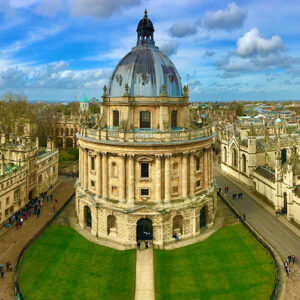
A view of Oxford Radcliffe Camera

Radcliffe Camera

Radcliffe Camera is a neo-classical style building inside Oxford University, built from 1737 to 1749 for the Radcliffe Science Library.

Explore »
Oxford University - Gladstone Link.

Gladstone Link

The Gladstone Link is an underground library connecting the Bodleian Library with the Radcliffe Camera. It opened to readers on 5 July 2011.

Explore »

Iconic Oxford Colleges

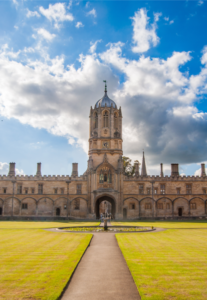
Oxford’s unique structure comprises a collection of colleges, each with its own distinct personality and history. From the storied halls of Christ Church to the intimate charm of Magdalen, exploring these collegiate enclaves offers a glimpse into the daily lives of scholars past and present. Many colleges welcome visitors to stroll through their gardens, chapels, and dining halls.

Oxford University - Balliol College. Image courtesy of Billy Wilson.

Balliol College

One of Oxford’s oldest and most intellectually influential colleges, known for its historic courtyards and strong academic tradition.

Explore »
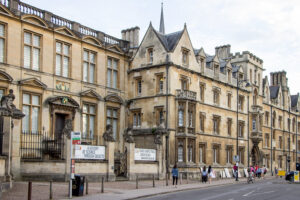
Oxford University - Exeter College. Image courtesy of Billy Wilson.

Exeter College

A historic city-centre college known for its striking chapel, lively student life, and atmospheric medieval architecture.

Explore »
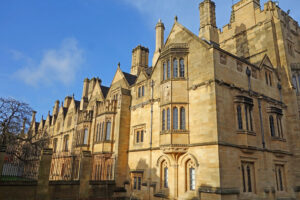
Oxford Colleges - Keble College. Image courtesy of David Nicholls.

Keble College

Instantly recognizable for its bold Victorian architecture and expansive grounds, Keble offers one of Oxford’s most distinctive settings.

Explore »