
Oxford’s George Street
George Street in Oxford is one of the city’s most vibrant and bustling thoroughfares, known for its lively atmosphere and diverse offerings.

Exploring the city
Walking through Oxford’s passages, lanes, and streets offers a unique experience where history comes alive.
These routes are not just thoroughfares; they are storytellers narrating tales of the scholars, residents, and visitors who have traversed them over the centuries. They are, no doubt, a vital part of the city’s character, offering both a connection to the past and a vibrant present. So, exploring them is one of the best ways to truly experience the depth and richness of Oxford!
Many of Oxford’s passages and lanes date back centuries, often serving as shortcuts or connecting routes between more prominent streets. Turl Street, for example, is one of Oxford’s most historic streets, connecting Broad Street with High Street. It is home to several University of Oxford colleges, including Exeter, Jesus, and Lincoln, and is known for its quaint atmosphere, lined with old buildings that evoke a sense of stepping back in time.
Another notable passage is Brasenose Lane, which runs between Radcliffe Square and Turl Street. This narrow lane, bordered by high stone walls, is steeped in history, flanked by Brasenose College and the Old Bodleian Library. Walking through Brasenose Lane, you get a sense of Oxford’s ancient academic traditions and the centuries of scholars who have walked these same paths.
Beyond the more famous streets and lanes, Oxford is full of hidden passages that invite exploration. St. Helen’s Passage, also known as Dead Man’s Walk, is a narrow alleyway that leads from New College Lane to the Turf Tavern, one of Oxford’s oldest pubs. The passage’s name and secluded nature add a touch of mystery to its historical significance.
Merton Street is another hidden gem, often less crowded than the main tourist routes. It offers stunning views of Merton College and the cobbled street, providing a peaceful escape within the bustling city.
Some of Oxford’s streets, while modernized, still retain their historical charm. George Street, for instance, is a lively thoroughfare filled with restaurants, cafes, and theatres, yet it is surrounded by architecture that reflects Oxford’s deep history. This street serves as a bridge between the old and the new, encapsulating the essence of a city that respects its past while embracing the present.
Holywell Street is another example, famous for its beautiful old houses and its proximity to some of Oxford’s most iconic buildings, like the Radcliffe Camera and the Sheldonian Theatre. Walking down Holywell Street, you can appreciate the mix of residential life and academic history that defines much of Oxford.

George Street in Oxford is one of the city’s most vibrant and bustling thoroughfares, known for its lively atmosphere and diverse offerings.

Cornmarket Street is one of the most iconic and busiest streets in Oxford, known for its lively atmosphere and central location.

Turl Street is one of the most charming and historic streets in Oxford, known for its central location and its close ties to the University.
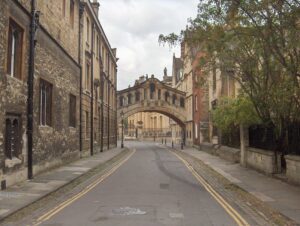
New College Lane connects Catte Street with Queen’s Lane and is a hidden gem that captures the historic and tranquil essence of Oxford.

Located in the heart of Oxford, Catte Street dates back to the medieval period and connects Broad Street with the Radcliffe Camera.

Merton Street is one of the city’s historic thoroughfares. The cobbled street retains much of its medieval character
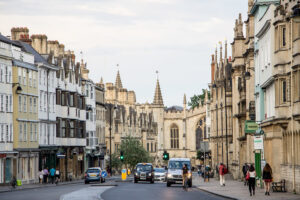
Often referred to as “The High,” this street is one of Oxford’s main thoroughfares and has been central to the city since medieval times.

Dead Man’s Walk is a historic and eerie pathway in Oxford, located near Merton College and stretching along part of the old city wall.

Brasenose Lane is a narrow, historic lane in the heart of Oxford that runs between Radcliffe Square and Turl Street.

Holywell is one of Oxford’s most charming and historic streets, rich in architectural beauty and academic heritage.

St Aldate’s Street is one of the main streets in the historic city of Oxford. It runs from the Carfax intersection, the heart of the city.

Located in the heart of the city, Broad Street is a central thoroughfare that connects several key landmarks and institutions.

North Parade Avenue is a charming, short street in Oxford known for its unique character and village-like feel. Here’s how to visit.