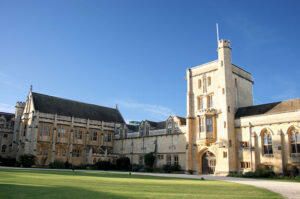
All Souls College
One of Oxford’s most prestigious and mysterious colleges, dedicated entirely to fellows and advanced scholarship.

The University
Stepping into the hallowed halls of Oxford University is to enter a realm where centuries of academic excellence, architectural grandeur, and intellectual curiosity converge. As one of the oldest and most prestigious universities in the world, Oxford beckons visitors with its timeless charm and a palpable sense of history.
Explore the most incredible colleges, museums and halls of Oxford University. Plan your visit to the city and its University, and find ideas for walks and tours.
1096-1248
1200s
1642-1651
1854
2000s – Present
Foundation of Oxford University
The University of Oxford is established during the 12th century. While the exact founding date is unclear, teaching existed by 1096, and the university received its charter in 1248.
Academic Growth
Oxford University experiences significant growth during the 13th century. Founding of notable colleges like University College (1249) and Balliol College (1263) contributes to its development.
Civil War Impact
Oxford becomes a Royalist stronghold during the English Civil War. The city faces conflict and sieges during this tumultuous period.
University Reform
The Oxford University Act of 1854 brings about significant reforms in governance and curriculum, shaping the university’s structure in the 19th century.
Modern Developments
Oxford remains a global academic powerhouse in the 21st century thanks to research breakthroughs, technological advancements, and a commitment to excellence.
Oxford’s unique structure comprises a collection of colleges, each with its own distinct personality and history. From the storied halls of Christ Church to the intimate charm of Magdalen, exploring these collegiate enclaves offers a glimpse into the daily lives of scholars past and present. Many colleges welcome visitors to stroll through their gardens, chapels, and dining halls.

One of Oxford’s most prestigious and mysterious colleges, dedicated entirely to fellows and advanced scholarship.

One of Oxford’s oldest and most intellectually influential colleges, known for its historic courtyards and strong academic tradition.
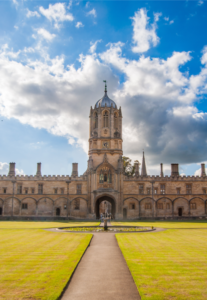
Oxford’s grandest college, celebrated for its magnificent dining hall, cathedral, and iconic film locations.
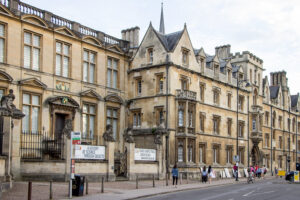
A historic city-centre college known for its striking chapel, lively student life, and atmospheric medieval architecture.

Instantly recognizable for its bold Victorian architecture and expansive grounds, Keble offers one of Oxford’s most distinctive settings.
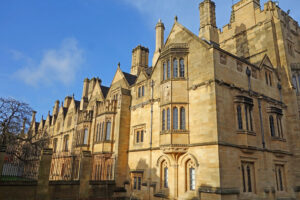
One of Oxford’s most beautiful colleges, famous for its riverside walks, deer park, and soaring medieval tower.

Distinguished by its symmetrical Baroque architecture, Queen’s is one of Oxford’s most visually refined colleges.

A peaceful and picturesque college celebrated for its immaculate lawns and quiet elegance.
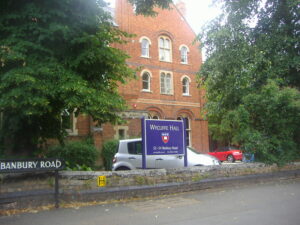
There are six permanent Private Halls that belong to the University of Oxford. Permanent Private Halls are owned and governed by an outside institution and not by its fellows. Find out whether you can visit the Halls and what you shouldn’t miss if you do.

Blackfriars is a Permanent Private Hall (owned by an outside institution) of Oxford University. It houses three distinct institutions.
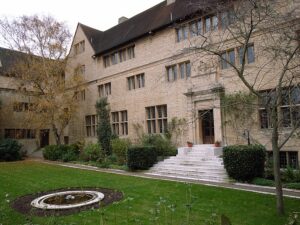
There are six Permanent Private Halls at the University of Oxford in England. Campion Hall is run by the Society of Jesus.
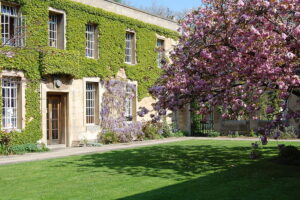
Located in central Oxford, just off St Giles’, Regent’s Park College is a permanent private hall of the University of Oxford.

St Benet’s Hall is one of Oxford’s Permanent Private Halls. Its principal building is located on the side of St Giles.
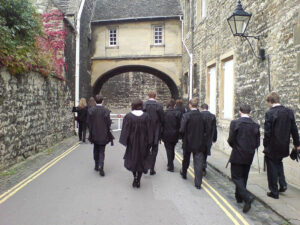
Explore the university traditions, and learn more about the different academic terms, the halls, common rooms, and beautiful medieval quadrangles. Discover ancient traditions and get a glimpse of what life is like for Oxford students, researchers, workers, and visitors.

Oxford has its fair share of famous alumni. Some of them, you have not known were graduates. When they attended and how well they did.

Many Oxford University courses require you to pass admissions tests. In this article, we will explain what they are, and which ones you will need.

A breakdown of the number of applications received by the University of Oxford from different countries (based on the 2024 report).

The University of Oxford has a rich history dating back to the year 1096. It’s actually the oldest university in the English-speaking world.

If you’re over 21 years old when you start your Oxford course, you will be considered a mature applicant. The process is a little complex.